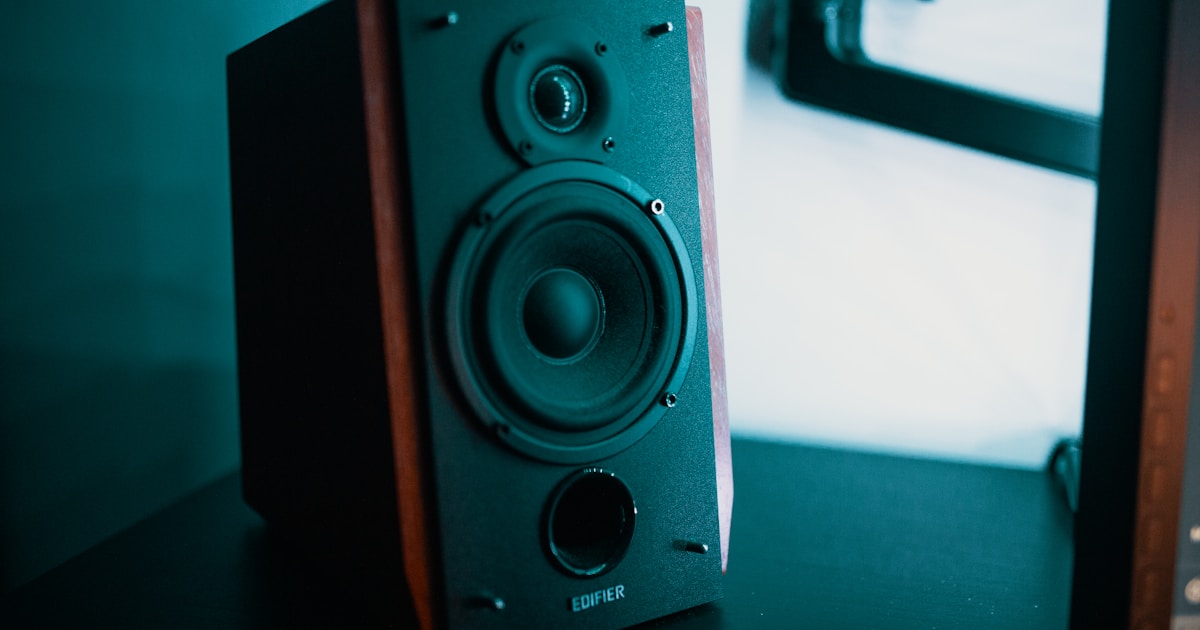
Best Bookshelf Speakers 2026: Powered & Passive, Every Budget
Bookshelf speakers are where real hi-fi begins and where most of it should end: for rooms under 300 square feet, a good pair on stands outperforms tower speakers costing more, images better than any soundbar made, and scales from a $100 starter set to systems that embarrass dedicated listening rooms. This guide covers the whole ladder, from the Edifier pair that starts a thousand audio journeys to KEF’s reference monitors, and explains the one decision that shapes everything else: powered convenience or passive tradition.
Quick picks
- Top pick: 2. Kanto YU6: Best One-Box Living Room System
- Also great: 3. Fluance Ai61: Best for Vinyl Starters
- Best value: 4. ELAC Debut 3.0 B6.3: Best Entry Audiophile Passive
Prices change often, so check the current price before buying.
Table of Contents
Quick Picks
- Best first hi-fi: Edifier R1280T. The powered pair that has converted more people to real audio than anything this decade.
- Best all-in-one system: KEF LSX II. Streaming, DAC, and amps inside two beautiful cabinets.
- Best passive value: Polk Reserve R200. Audiophile performance at a mid-tier price.
- Best money-no-object: KEF R3 Meta. The bookshelf that competes with towers.
Comparison Table
| Speaker | Type | Needs amp | Inputs | Best use | Price tier |
|---|---|---|---|---|---|
| Edifier R1280T | Powered | No | 2× RCA | First system, desk or shelf | $ |
| Kanto YU6 | Powered | No | BT, optical, RCA, phono | One-box living room hi-fi | $$ |
| Fluance Ai61 | Powered | No | BT, optical, USB-C, RCA | Vinyl-adjacent setups | $$ |
| ELAC Debut 3.0 B6.3 | Passive | Yes | Binding posts | Entry audiophile builds | $$ |
| Polk Reserve R200 | Passive | Yes | Binding posts | Serious stereo, HT fronts | $$$ |
| B&W 606 S3 | Passive | Yes | Binding posts | Refined British hi-fi | $$$ |
| KEF LSX II | Powered wireless | No | Wi-Fi, HDMI ARC, optical, USB | Complete streaming system | $$$$ |
| KEF R3 Meta | Passive | Yes (good one) | Binding posts | Reference listening | $$$$$ |
Powered or Passive: The Fork in the Road
Powered speakers hide the amplifier inside the cabinet: plug into the wall, connect a source, done. They are the right answer for most people in 2026, cheaper as a system, tidier, and engineered as a matched whole. Passive speakers need a separate amplifier, which costs more and adds a box, but buys upgrade freedom: amp today, speakers next year, each piece replaceable as ears and budgets grow. The rule of thumb: powered for convenience-first rooms and complete-system value, passive for hobbyists who intend to tinker, and never feel guilty about either. Our under-$500 deep dive works this decision in detail for the budget tiers; this guide carries it up the ladder.
The Best Bookshelf Speakers, Reviewed
1. Edifier R1280T: Best First Hi-Fi
Edifier R1280T Powered Bookshelf Speakers
The R1280T is the most recommended first speaker on the internet for boring, wonderful reasons: real wood-grain cabinets, a warm and forgiving tune, two RCA inputs, a remote, and a price that undercuts a night out. Against any Bluetooth cylinder or TV speaker, the first hour is a revelation; against audiophile gear it is merely pleasant, which at this price is a triumph.
No Bluetooth on this base model (siblings add it), and bass reaches politely rather than deep. As the gateway that proves what stereo separation actually is, nothing has ever done the job cheaper or better.
Pros
- Unbeatable entry price for real stereo
- Warm, forgiving sound with any source
- Wood cabinets that look above their price
Cons
- No Bluetooth on the base model
- Modest bass depth and volume ceiling
2. Kanto YU6: Best One-Box Living Room System
Kanto YU6 Powered Speakers
The YU6 is what happens when powered speakers grow up: 200 watts of clean amplification, silk tweeters over Kevlar woofers, and an input panel that replaces a rack, Bluetooth with aptX, optical for the TV, RCA, and a proper phono preamp for a turntable. Add a subwoofer output and a remote, and one pair of handsome cabinets runs an entire living room’s audio life.
The tuning is lively and crowd-pleasing rather than studio-flat, which suits its everything-speaker mission. For the listener who wants real hi-fi without ever thinking about amplifier matching, this is the category’s high-water mark.
Pros
- Every input that matters, including phono
- Genuine room-filling power
- Subwoofer output for later expansion
Cons
- Crowd-pleasing tune, not reference-flat
- Costs real money for powered convenience
3. Fluance Ai61: Best for Vinyl Starters
Fluance Ai61 Powered Speakers
Fluance built its name on affordable turntables, and the Ai61 is the speaker designed to sit beside them: 120 watts, a composite driver with silky top end, Bluetooth 5, optical, USB-C, and RCA inputs ready for a table with its own preamp. The cabinets, in walnut especially, look like twice their price.
There is no phono stage inside, so pair with a turntable that has one built in (most starter tables do) or add a $60 preamp. For the record-player-on-the-sideboard aesthetic backed by honest sound, it is the natural match, and turntable owners tuning their rigs should see our cartridge and stylus guide for the other half of the equation.
Pros
- Gorgeous cabinets, especially in walnut
- USB-C input welcomes modern sources
- Balanced, easy-listening tune
Cons
- No built-in phono preamp
- Less power than the Kanto
4. ELAC Debut 3.0 B6.3: Best Entry Audiophile Passive
ELAC Debut 3.0 B6.3 Passive Speakers
Andrew Jones’s Debut line taught a generation that audiophile sound does not require audiophile prices, and the third generation continues the lesson: a 6.5-inch aramid woofer, waveguide-loaded tweeter, and a balanced, honest presentation that reveals what is on the recording. Feed them a modest 50-100 watt amp or receiver and they punch far above their tier.
Being passive, they need that amp, and their vinyl-wrap cabinets are pure function. As the first passive pair in a system meant to grow, they are the classic on-ramp.
Pros
- Reference-adjacent sound at entry passive prices
- Easy load for affordable amps
- Legendary design pedigree
Cons
- Requires an amplifier purchase
- Utilitarian cabinet finish
5. Polk Reserve R200: Best Passive Value
Polk Reserve R200 Passive Speakers
The R200 is the pair reviewers keep measuring and keep being surprised by: technology trickled from Polk’s flagship Legend line, a ring-radiator tweeter, and turbine-cone mid-woofer delivering neutrality and imaging that trade blows with speakers at twice the price. In a stereo pair or as the front stage of a serious home theater, they disappear into the music, the highest compliment speakers earn.
They reward quality amplification and stands, and their size wants a bit of breathing room from walls. For the listener assembling a system to keep for a decade, this is where the serious tier begins.
Pros
- Flagship tech at mid-tier pricing
- Neutral, wide, disappearing soundstage
- Excellent home-theater front pair
Cons
- Big for a bookshelf; wants stands
- Deserves (and needs) a good amp
6. Bowers & Wilkins 606 S3: Best British Refinement
Bowers & Wilkins 606 S3 Passive Speakers
B&W’s 600 series has anchored British hi-fi shops for thirty years, and the S3 generation borrows tweeter engineering from speakers costing ten times more. The signature is refinement: a titanium-dome treble that stays sweet at volume, Continuum-cone mids with startling vocal presence, and a sound that flatters good recordings without shredding bad ones.
They show their best with quality amplification and careful placement, and the price sits at the top of mainstream. For the listener whose reference is vocal texture and long, fatigue-free evenings, the 606 earns its badge.
Pros
- Flagship-derived tweeter and mids
- Refined, fatigue-free presentation
- Pedigree and resale value
Cons
- Premium price before the amp
- Placement-sensitive
7. KEF LSX II: Best Complete Wireless System
KEF LSX II Wireless Speakers
The LSX II deletes the equipment rack: inside two compact Uni-Q cabinets live amplifiers, DACs, and streaming for AirPlay 2, Chromecast, Spotify and Tidal Connect, plus HDMI ARC for the TV, optical, and USB. KEF’s concentric driver puts tweeter inside woofer so sound arrives as one coherent point, and the result in small and mid rooms is astonishingly complete.
You pay for the integration, and bass obeys cabinet physics until the matching sub arrives. As the no-compromise answer to “I want wonderful sound and zero boxes,” nothing under flagship money touches it.
Pros
- Streaming, DAC, amps: the whole system inside
- Uni-Q coherence in a tiny footprint
- HDMI ARC doubles as superb TV audio
Cons
- Flagship-adjacent pricing
- Compact cabinets, compact bass
8. KEF R3 Meta: Best Reference Bookshelf
KEF R3 Meta Passive Speakers
The R3 Meta is the bookshelf that ends upgrade paths: a three-way design with dedicated midrange inside the Uni-Q array, metamaterial absorption tech soaking up distortion behind the tweeter, and bass response that makes first-time listeners check for a hidden subwoofer. Driven by a serious amplifier, it competes directly with floorstanders and wins on imaging.
This tier demands commitment: amplification worthy of it, stands, placement care, and a price that buys used cars. For the destination system in a dedicated room, it is the strongest bookshelf argument money makes.
Pros
- Three-way reference design, tower-class bass
- Metamaterial tech audibly lowers distortion
- Endgame imaging and resolution
Cons
- Endgame pricing too
- Demands quality amplification and placement
Buying Guide
Budget math across the whole system
Passive budgets split roughly 60/40 between speakers and amplifier, so $600 speakers imply a $400 amp for balance; starving great passives with a $60 amp wastes their potential. Powered pairs bundle that math, which is why they dominate value tiers. Whatever the tier, reserve $50-150 for stands: tweeters at seated ear height and cabinets off the furniture unlock performance no upgrade elsewhere matches, and for desk-scale listening our computer speakers guide covers the near-field siblings of everything here.
Room size honesty
Bookshelf speakers rule rooms to roughly 300 square feet. The Edifier and LSX II suit small rooms; the Kanto, Polk, and B&W fill mid rooms; the R3 Meta pressurizes large ones. Bass below ~45Hz is subwoofer territory at every tier, and most picks here offer sub outputs or integrate with one, which beats buying bigger speakers for depth alone.
Where each budget should land
Under $200: Edifier, no hesitation, and see the under-$500 guide for that whole neighborhood. $400-700: Kanto or Fluance powered, ELAC passive if an amp exists or beckons. $700-1500: Polk R200 or B&W 606 passive builds, or LSX II for the all-in-one. Beyond: the R3 Meta and a serious amplifier, and the satisfying knowledge that the next upgrade is the room itself.
FAQ
Do I need an amplifier for bookshelf speakers?
Only for passive models (ELAC, Polk, B&W, KEF R3 here). Powered picks (Edifier, Kanto, Fluance, LSX II) have amplification built in and connect straight to sources. Check the back: binding posts mean amp required, power cord means self-contained.
Are bookshelf speakers better than a soundbar?
For music, decisively: two separated cabinets image in ways a single bar cannot. Soundbars win for cinematic TV convenience. Several picks here (Kanto, LSX II) take TV input and split the difference beautifully.
Can bookshelf speakers actually sit on a bookshelf?
They can, at a cost: boundary reflections thicken bass and smear imaging. Stands at ear height, slightly off walls, unlock what you paid for. If the shelf is non-negotiable, front-ported or sealed designs behave best.
How much should I spend on my first real speakers?
$100-130 (Edifier R1280T) genuinely starts the journey. The next meaningful jumps land around $400 (Kanto/Fluance tier) and $700-900 (Polk/B&W with amp). Each tier is audible; none makes the previous one wrong.
What matters more, speakers or amplifier?
Speakers, by a wide margin: they shape the sound; the amp mostly needs to be competent and sufficiently powerful. Spend 60% of a passive budget on speakers, and upgrade amplification only after speakers and stands are right.
Final Verdict
Start with the Edifier R1280T and you will understand the entire hobby by the second album. Graduate to the Kanto YU6 when one elegant pair should run the living room, or the Polk Reserve R200 when a passive system worth building around is the goal. The KEF LSX II is the finest complete system two boxes currently hold, and the R3 Meta is where the ladder ends and the listening begins.
Every tier here is a good place to stop; the budget tiers get their own deep dive in our under-$500 roundup. Buy the pair your room and budget honestly support, put them on stands, and let them spend a decade proving it was enough.