Best E-Ink Tablets 2026: Digital Notebooks Compared
Table of Contents
E-Ink Tablet Comparison Table
| Product | Display Size | Resolution | Price | Best For | Battery Life |
|---|---|---|---|---|---|
| Remarkable 3 | 11.8 inches | 2560 x 1860 | $189 | Professional writers | 3 weeks |
| Kobo Elipsa 2e | 10.3 inches | 2560 x 1920 | $149 | Note-taking & reading | 4 weeks |
| Supernote A5X2 | 7.8 inches | 1872 x 1404 | $129 | Portable note-taking | 3+ weeks |
| Amazon Kindle Scribe | 10.2 inches | 2560 x 1920 | $168 | Reading with notes | 2+ weeks |
| Boox Page | 7.3 inches | 1872 x 1404 | $99 | Budget-conscious users | 2 weeks |
Best E-Ink Tablets Reviewed
Remarkable 3 – Premium Digital Writing Experience
Best Overall
Display: 11.8-inch E Ink Gallery display with 2560 x 1860 resolution
Writing Experience: Ultra-thin Marker Plus stylus with minimal latency (ideal for professionals and serious note-takers)
Connectivity: Wi-Fi enabled with cloud synchronization
Storage: 256GB internal storage for thousands of documents
★★★★★
$189.00
Pros:
- Exceptional display quality with fast refresh rates
- Premium writing feel closest to paper
- Extended 3-week battery life
- Excellent organizational tools for documents
- Consistent performance across all apps
Cons:
- Premium pricing relative to competitors
- Limited third-party app ecosystem
- Stylus sold separately
- No built-in frontlight (optional add-on)

Kobo Elipsa 2e – All-in-One Reading & Writing Device
Best Value
Display: 10.3-inch E Ink Gallery display with 2560 x 1920 resolution
Features: Stylus included, adjustable frontlight, supports EPUB and PDF files natively
Storage: 32GB capacity with access to Kobo’s extensive eBook library
Comfort Reading: Dark mode and warm light for extended reading sessions
★★★★☆
$149.00
Pros:
- Stylus included in the box
- Excellent for reading and writing balance
- Impressive 4-week battery endurance
- Access to Kobo’s eBook marketplace
- Great mid-range pricing
Cons:
- Writing experience not as smooth as premium models
- Limited customization options
- Slower page refresh than competitors
- Smaller stylus pressure sensitivity
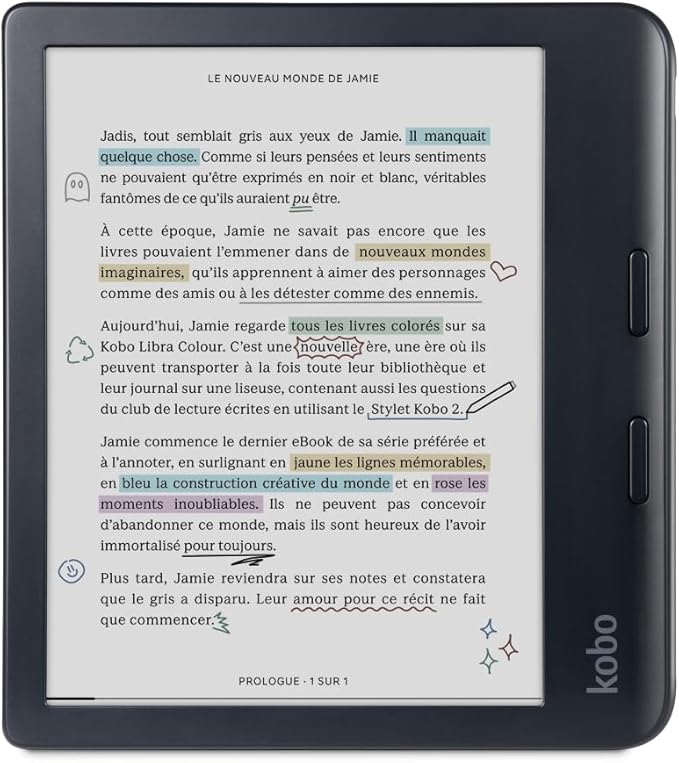
Supernote A5X2 – Portable Note-Taker’s Dream
Best Portable
Display: 7.8-inch flexible E Ink screen with 1872 x 1404 resolution
Writing Precision: Superior pressure sensitivity (8192 levels) with ultra-responsive stylus
Size: Pocket-friendly dimensions perfect for travel and commuting
Software: Powerful note organization with AI-powered search and handwriting recognition
★★★★★
$129.00
Pros:
- Ultra-portable 7.8-inch form factor
- Exceptional writing responsiveness
- Advanced handwriting search and OCR
- Excellent battery efficiency (3+ weeks)
- Flexible screen reduces glare
Cons:
- Smaller screen limits document complexity
- Learning curve for interface
- Limited reading functionality
- Niche software ecosystem

Amazon Kindle Scribe – Reading-First E-Reader
Best for Readers
Display: 10.2-inch E Ink Gallery display with 2560 x 1920 resolution
Content Access: Direct integration with Kindle library and Amazon services
Writing Features: Stylus support with note-taking capabilities (stylus included)
Smart Features: AI-powered definitions, vocabulary builder, and reading insights
★★★★☆
$168.00
Pros:
- Seamless Amazon ecosystem integration
- Massive Kindle library availability
- Stylus included with purchase
- Reliable 2+ week battery life
- Excellent for reading-focused users
Cons:
- Note-taking secondary to reading
- Limited OpenSource support
- Premium pricing for reading-primary device
- Less flexible note organization

Boox Page – Budget-Friendly Digital Notebook
Best Budget
Display: 7.3-inch E Ink Gallery with 1872 x 1404 resolution
Operating System: Android-based with Google Play Store access
Versatility: Supports third-party apps for reading, writing, and browsing
Performance: Octa-core processor ensures smooth navigation and quick response times
★★★★☆
$99.00
Pros:
- Exceptional value at under $100
- Full Android ecosystem access
- Adequate performance for note-taking
- Compact portable design
- Stylus compatibility with pressure sensitivity
Cons:
- Shorter 2-week battery life
- Lower writing pressure levels (4096)
- Slower refresh rates than premium options
- Android optimization less refined

Complete E-Ink Tablet Buying Guide 2026
Understanding E-Ink Technology
E-Ink displays use electronic paper technology that mimics traditional paper, offering exceptional readability without backlight strain. Unlike LCD screens, E-Ink pixels hold their charge independently, allowing for extended battery life measured in weeks rather than hours. The technology has evolved significantly, with modern variants supporting faster refresh rates, higher contrast ratios, and even color capabilities.
Display Size Considerations
E-Ink tablets range from compact 5-inch devices to expansive 13-inch screens. Smaller tablets (7-8 inches) offer superior portability, fitting easily in bags and backpacks—ideal for students and professionals on-the-go. Medium-sized devices (10-11 inches) balance portability with usable writing space, suitable for most users. Larger screens (12-13 inches) provide newspaper-sized reading and writing experiences but sacrifice mobility. Consider your primary use case: frequent travel favors smaller sizes, while desktop use benefits from larger displays.
Writing Experience and Stylus Technology
The stylus quality dramatically impacts the writing experience. Premium devices feature pressure sensitivity levels between 4096 and 8192, enabling natural pen-like writing with varied stroke widths. Lower-end models typically offer 2048 levels. Latency—the delay between pen movement and screen response—should be under 100ms for comfortable writing. Advanced styluses include tilt recognition, palm rejection, and eraser functionality. Some tablets include the stylus in the box, while others require separate purchase at $20-100.
Battery Life and Charging
E-Ink tablets’ exceptional battery efficiency ranges from 2-4 weeks on a single charge, depending on usage intensity. Models with frequent page refreshes and Wi-Fi connectivity consume more power. Consider your use patterns: heavy daily users may prefer devices with 3+ week endurance to minimize charging frequency. Most use USB-C or proprietary charging, with most tablets taking 1-2 hours to fully charge. Some premium models support wireless charging.
Operating System and App Ecosystem
Three primary platforms dominate: proprietary systems (Remarkable, Supernote, Kobo), offering streamlined but limited app ecosystems optimized for notes and reading; Android-based systems (Boox) providing access to Google Play Store but potentially compromising E-Ink optimization; and Amazon’s closed ecosystem (Kindle Scribe) delivering extensive reading content but limited third-party customization. Choose based on whether you prioritize app availability or focused note-taking experience.
Reading vs. Writing Capability
Dedicated digital notebooks excel at writing but offer limited reading features. Reading-focused devices like Kindle Scribe prioritize content consumption with built-in eBook libraries and reading tools. Hybrid devices attempt both functionalities but may compromise on one. Determine whether you primarily take notes, read documents, or need balanced capabilities.
Cloud Synchronization and File Format Support
Modern E-Ink tablets support cloud services (iCloud, OneDrive, Google Drive) for automatic backup and cross-device synchronization. Verify compatibility with file formats you use regularly: PDF, EPUB, DOC, and image files. Some devices support handwriting export to searchable text, valuable for converting notes into digital documents. Premium models offer more robust cloud integration.
Price-to-Feature Ratio
Budget models ($99-129) provide solid note-taking functionality suitable for casual users. Mid-range devices ($149-168) balance features with affordability, offering excellent value. Premium tablets ($189+) deliver superior writing experiences, faster performance, and advanced features for professional users. Your budget should align with intended usage frequency and feature requirements.
Frontlight and Display Technologies
Frontlight technology enables reading in low-light conditions—increasingly standard in 2026 devices. Some models offer warm light filters reducing eye strain during evening use. E Ink Gallery technology provides enhanced contrast and faster refresh rates compared to standard displays. Newer models support variable refresh rates, automatically adjusting based on content type for optimal performance and battery efficiency.
Durability and Build Quality
Consider construction materials: metal bodies offer superior durability but add weight, while plastic designs provide lighter weight at potential cost to longevity. Screen protectors and cases add protection but reduce writing responsiveness for some users. Check warranty coverage (typically 1-2 years) and manufacturer support reputation. Flexible screens offer durability advantages but may affect pressure sensitivity.
Frequently Asked Questions
Can E-Ink tablets connect to computers for file transfer?
Yes, most modern E-Ink tablets support USB-C connections for direct file transfer. Many also offer cloud synchronization through services like iCloud, Google Drive, or OneDrive. The Remarkable, Supernote, and Boox devices all support multiple connection methods. Amazon Kindle Scribe integrates with your Amazon account for content management.
Are E-Ink tablets suitable for PDF annotation?
Absolutely. All featured devices excel at PDF annotation with pressure-sensitive styluses. They support various markup tools (highlighting, handwriting, shapes). Professional models like Remarkable 3 and Supernote A5X2 offer advanced annotation features. Android-based Boox provides compatibility with additional annotation apps through Google Play Store.
What’s the difference between E-Ink and E-Paper?
E-Ink and E-Paper are technically synonymous terms, though “E-Ink” technically refers to technology by the company E Ink Holdings. The displays use the same electronic paper technology creating paper-like reading experiences. Both offer similar benefits: low power consumption, excellent readability, and minimal eye strain compared to traditional screens.
Can E-Ink tablets replace traditional notebooks?
For most users, yes. E-Ink tablets offer superior organization, searchability, and backup capabilities compared to paper notebooks. However, some users prefer paper’s tactile feedback. Modern E-Ink tablets closely approximate paper writing experiences through advanced pressure sensitivity and rapid refresh rates. Trial use helps determine personal preference.
Do E-Ink tablets reduce eye strain compared to standard screens?
Yes, significantly. E-Ink displays don’t emit blue light and require no backlight, reducing eye fatigue during extended use. Studies show E-Ink users experience less strain than LED/LCD screen users. The technology mimics paper’s light reflection rather than emission. Added frontlight features in 2026 models enable low-light reading while maintaining strain reduction benefits.
Final Verdict
Best Overall: The Remarkable 3 stands out with its premium writing experience, exceptional display quality, and professional-grade performance. At $189, it’s ideal for writers, students, and professionals prioritizing note-taking quality above all.
Best Value: Kobo Elipsa 2e ($149) delivers exceptional all-around functionality, combining reading capabilities with capable note-taking. The included stylus and 4-week battery life make it outstanding value.
Best for Portability: Supernote A5X2 ($129) wins for compact form factor without sacrificing functionality. Advanced handwriting recognition and OCR features make it perfect for mobile professionals.
Best for Amazon Ecosystem: Kindle Scribe ($168) excels if you’re embedded in Amazon’s services, providing seamless integration with your existing Kindle library and content ecosystem.
Best Budget Option: Boox Page ($99) provides remarkable value for casual note-takers and readers, offering flexibility through Android compatibility at an unbeatable price point.
The ideal choice depends on your specific needs: professional writers should invest in Remarkable 3; balanced users prefer Kobo Elipsa 2e; mobile professionals choose Supernote A5X2; Amazon users benefit from Kindle Scribe; and budget-conscious buyers select Boox Page. All five represent excellent 2026 options covering the full $99-189 price spectrum.
