Best Smart Plugs 2026: Budget Smart Home Starter Guide
Best Smart Plugs 2026: Budget Smart Home Starter Guide
Table of Contents
| Product | Price | Smart Home Platform | Key Features | Power Monitoring | Design |
|---|---|---|---|---|---|
| TP-Link Kasa Smart Plug Mini | $9.99 | Alexa, Google Home | Scheduling, Away Mode, Timer | Yes | Ultra-compact |
| Amazon Smart Plug | $14.99 | Alexa | Voice Control, Scheduling, Routines | No | Slim design |
| Wyze Plug | $7.99 | Alexa, Google Home | Energy Monitoring, Scheduling, Remote Control | Yes | Compact cube |
| Meross Smart Plug Ultra | $24.99 | Alexa, Google Home, Apple Home | Temperature Monitoring, USB-C Port, Thread Support | Yes | Premium compact |
| Lutron Caseta Smart Plug | $49.99 | Alexa, Google Home, Apple Home | Premium Build, Instant Response, Dual Outlets | Limited | Dual outlet design |
1. TP-Link Kasa Smart Plug Mini – Best Budget Option
$9.99
Amazon Alexa, Google Assistant
15A (Max 1800W)
Energy Monitoring, Scheduling, Timer, Away Mode
3 Years
Why Choose This?
The TP-Link Kasa Smart Plug Mini is the gold standard for budget-conscious smart home enthusiasts. At under $10, it delivers exceptional value without compromising on essential functionality. The ultra-compact design won’t block adjacent outlets, making it perfect for apartment living or crowded power strips.
What truly sets this plug apart is its comprehensive energy monitoring feature. You can track real-time power consumption and historical usage patterns through the Kasa app, helping you identify energy-hungry appliances and reduce your electricity bills. The scheduling system is intuitive, allowing you to set up complex automation routines without needing a hub.
The Away Mode feature is particularly valuable for security-conscious users. When activated, the plug randomly turns connected devices on and off to simulate occupancy, deterring potential burglars while you’re on vacation. Voice control integration with both Alexa and Google Home ensures compatibility with any ecosystem.
Pros
- Incredibly affordable entry point
- Compact form factor doesn’t block other outlets
- Excellent energy monitoring capabilities
- Works with both Alexa and Google Home
- 3-year warranty provides peace of mind
- App is user-friendly and responsive
Cons
- Requires WiFi connection (no hub available)
- Limited to 2.4GHz WiFi band
- No USB ports for charging
- Occasional connection drops reported

2. Amazon Smart Plug – Best for Alexa Users
$14.99
Amazon Alexa Only
16A (Max 1920W)
Voice Control, Smart Routines, Scheduling, Remote Control
1 Year Limited
Why Choose This?
If you’re already invested in the Amazon Alexa ecosystem, the Amazon Smart Plug is a no-brainer addition. Manufactured to Amazon’s specifications, it offers seamless integration with your existing Alexa devices and delivers the tightest experience possible.
The standout feature is its deep integration with Alexa Routines. You can create complex automation sequences that involve multiple devices, triggers, and conditions. For example, saying “Alexa, I’m leaving” can trigger a routine that turns off the smart plug, locks your smart lock, and adjusts your thermostat simultaneously.
The slim design is more aesthetically pleasing than many competitors, fitting naturally into any room’s decor. At $14.99, it sits in the sweet spot between budget options and premium alternatives, offering better performance than cheaper models while maintaining affordability.
Pros
- Perfect integration with Alexa ecosystem
- Slim, attractive design
- Excellent voice control responsiveness
- Smart Routines provide powerful automation
- Reliable WiFi connection
- Amazon’s reputation for support
Cons
- Alexa-only compatibility (no Google Home)
- No energy monitoring built-in
- 1-year warranty is shorter than competitors
- Requires Alexa device for full functionality
- No Thread support

3. Wyze Plug – Best Overall Value
$7.99
Amazon Alexa, Google Assistant
15A (Max 1800W)
Energy Monitoring, Scheduling, Remote Control, App Control
1 Year
Why Choose This?
The Wyze Plug represents the pinnacle of value in the smart plug market. At $7.99, it’s one of the cheapest options available, yet it doesn’t sacrifice features that matter. Wyze has built a reputation for delivering enterprise-grade functionality at consumer prices, and this plug exemplifies that philosophy.
The cube-shaped design is compact and won’t interfere with adjacent outlets. More importantly, it includes energy monitoring—a feature typically reserved for more expensive models. This allows you to track power consumption and identify which devices are consuming the most electricity, potentially saving money on your energy bills.
Wyze’s ecosystem is rapidly expanding and becoming more competitive. The plug works with both Alexa and Google Home, ensuring broad compatibility. The Wyze app is clean and intuitive, with all scheduling and automation features accessible without requiring any special hub or bridge.
Pros
- Extremely affordable at $7.99
- Energy monitoring for cost tracking
- Works with both Alexa and Google Home
- Compact cube design
- Excellent app functionality
- No hub required
- Great community support
Cons
- Wyze ecosystem less established than others
- Occasional firmware update issues
- Limited warranty period
- No Thread support
- WiFi connectivity can be inconsistent

4. Meross Smart Plug Ultra – Best Premium Option
$24.99
Alexa, Google Home, Apple HomeKit
16A (Max 1920W)
Thread Support, Temperature Monitoring, USB-C Port, Energy Monitoring
2 Years
Why Choose This?
The Meross Smart Plug Ultra elevates the smart plug category by introducing features that blur the line between plug and comprehensive smart home hub. While more expensive than basic options, the additional functionality justifies the investment for serious smart home enthusiasts.
The inclusion of Thread support is significant. Thread provides faster response times and improved reliability by creating a mesh network with other Thread-enabled devices. This is particularly valuable if you’re using Apple HomeKit, where Thread support ensures responsive, reliable automation that doesn’t depend on WiFi quality.
Built-in temperature monitoring adds a new dimension to plug utility. You can monitor the temperature of connected devices or the room itself, enabling temperature-based automation. The integrated USB-C port provides convenient charging for mobile devices without requiring additional outlets or adapters.
Pros
- Thread support for improved reliability
- Works with Alexa, Google Home, and Apple HomeKit
- Integrated USB-C charging port
- Temperature monitoring capability
- Comprehensive energy monitoring
- 2-year warranty
- Premium build quality
Cons
- Significantly more expensive than budget options
- Larger form factor than competitors
- USB-C port placement can interfere with adjacent outlets
- Requires HomeKit hub for full Apple integration
- Thread requires additional compatible devices
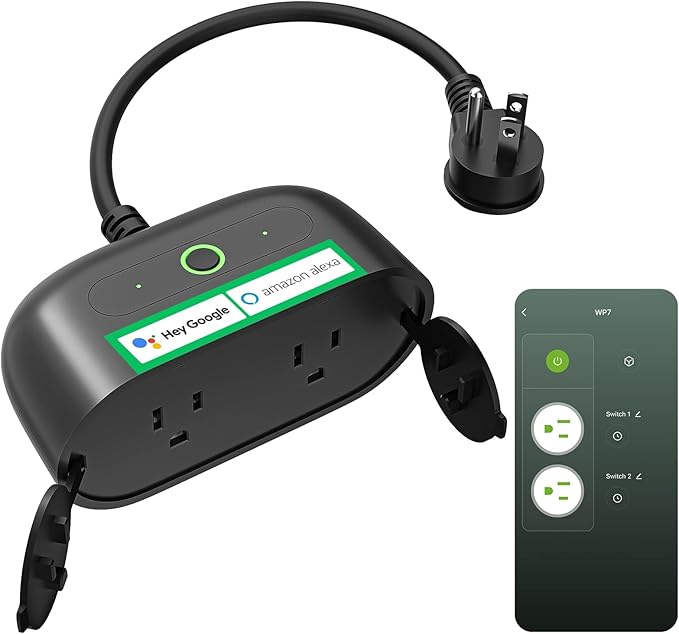
5. Lutron Caseta Smart Plug – Best for Premium Reliability
$49.99
Alexa, Google Home, Apple HomeKit
Two 15A outlets (Max 1800W each)
Dual Outlets, Instant Response, Premium Build, ZigBee Hub Integration
2 Years
Why Choose This?
Lutron has been a trusted name in home automation for decades, and the Caseta Smart Plug represents their commitment to reliability and performance. While it’s the most expensive option on this list, it delivers something unique: dual controllable outlets in a single package.
The dual-outlet design is transformative for users with limited outlet space. Unlike traditional smart plugs that control a single device, this allows independent control of two devices simultaneously. You can configure each outlet separately, creating different schedules and automation rules for each.
Lutron’s reputation is built on instantaneous response times. Unlike WiFi-based plugs that may experience slight delays, Caseta devices respond immediately to commands. When you toggle the switch, the connected device activates instantly. This level of responsiveness matters when controlling critical devices or when reliability is paramount.
The ZigBee integration (when used with a Caseta hub) provides mesh network benefits similar to Thread, ensuring robust connectivity throughout your home. The premium construction feels substantial and inspires confidence in long-term durability.
Pros
- Dual independent outlets in one device
- Instant response to commands
- Lutron’s renowned reliability and build quality
- Works with all major platforms
- 2-year warranty
- ZigBee support for mesh networking
- Excellent customer support
Cons
- Significantly more expensive than alternatives
- Large form factor blocks adjacent outlets
- Requires Caseta hub for optimal ZigBee functionality
- Limited energy monitoring features
- Overkill for simple smart plug needs
- May require hub upgrade if not already in Lutron ecosystem
